

Latest Yarns from a Shetland Croft
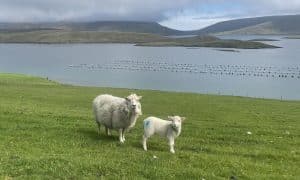
Spring and summer are usually the busiest time of year on the croft and this year was no exception. Since I haven’t posted for a while either on here on social media I thought I would do a bit of a round up of what’s been going on. Early May saw the lambing season which extends over around 3 weeks. Our sheep are all Shetlands, a hardly breed adapted to survive and thrive in the Shetland weather and landscape. The sheep lamb outside and we check them around every 4 hours or so. Very occasionally we might need to help a sheep in labour, although not often as Shetland sheep usually have the lambs naturally and are considered be very good mothers. The biggest problem newborn lambs face is the weather, if it is cold and or wet we will put them in a pen in the byre (barn) for a few hours or overnight to ensure the lamb can dry off as if it doesn’t it can dye of hypothermia. We also check the sheep has milk and the lamb gets a good feed to start them off well. after we are surer they are dry and healthy they get out outside into a small field surrounded by a stone wall where there’s plenty of shelter and later are let onto the main part of the croft.
We had a difficult time in June when we had an outbreak of Nematodirus, a parasite that lays its eggs in the grass; particular weather conditions cause the eggs to mass hatch, and the sheep and lambs ingest the larvae which can cause a lot of damage to the lambs’ digestive system. This is something we have never come across before and unlike the sheep unfortunately the lambs at this stage aren’t resistant to the parasite and we had seven lambs dying suddenly over the space of a few days. A post mortem by the local vet confirmed that Nematodirus was the culprit and gave us advice which we can follow another year: by regularly checking a specific Nematodirus forecast it tracks the weather conditions which will cause the mass egg hatch and we can treat the lambs at that time which will hopefully prevent deaths from the parasite. That’s one of the hardest parts of crofting, finding animals you have cared for unwell and dying. It is likely something we are going to see more and more due to changes in the weather patterns, but we live and learn. The rest of the lambs have continued to grow well and will soon be ready to go to market.
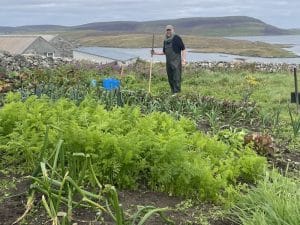
This year we have grown more vegetables than on previous years in the kail yard or vegetable garden. It was a very slow start, while most of the UK had soaring temperatures and droughts, it has been particularly wet an windy here with very little sun. However, we are seeing some nice crops coming through now, the hardiest of these crops always being those that thrive, such as kale, potatoes, beetroot, cabbages. Lettuce grow very well here too as it tends not to like high temperatures (that’s one advantage!) and this has supplied us with an endless supply of salad over the past few weeks.
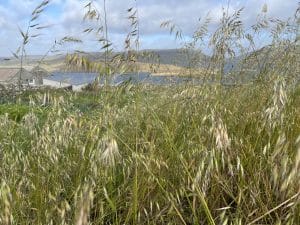
Something I tried growing for the first time this year is a small crop of Shetland Aets or Shetland black oats (Avena strigosa). Shetland oats are a distinct species from common oats (or as we would call them Scots oats) (Avena sativa) and thrives in poorer ground surrounded by sea spray so is an ideal crop to grow in Shetland. These oats are also still grown in some areas of northern Scotland and the Hebrides. Traditionally the seeds were used for animal feed and the stalks were used for basket and kishie making, straw roofing and straw backed chairs, the straw being narrower in width and lighter in colour than common oats. At one time in Shetland almost every crops would have grown them and they would have been included in their crop rotations (usually with potatoes) but changes in crofting practices and lifestyles have resulted in a massive reduction in the number of crofters growing Shetland oats. Coiled basket and kishie making have been added to the Heritage Crafts red endangered list, one issue other than a reduction of the number of people with these skills is the reduction in the availability of Shetland Oats. In addition to this the current seed stock is at critically low levels.
Last winter I attended a series of coiled basket making workshops on Saturday afternoons run by Samantha Dennis through the Shetland Straw Group, other classes on kishie (straw baskets) and knotted basket making took place at the same time. I loved it! It is a very different craft to knitting but I found the process fascinating and very meditative.
Earlier this year the Shetland Straw Society was officially established set up to promote the endangered straw crafts and to encourage growers to grow Shetland oats and in turn save the seed. I received a bag of Shetland oat seeds in the spring of this year and sowed a strip of around 18 x 3 m in the kail yard. It was a bit nerve wracking watching these precious seeds germinate and hoping that the birds didn’t strip the seedlings but the crops has grown really nicely, the stalks are a bit shorter where it is more exposed to the wind but they will still be good for basket making. They are not quite ripe enough for harvest yet but they should be ready in a week or two, particularly if we get a few days of September sun. Once the oats are dry, the seeds will be removed and saved for future sowing and the stalks kept for basket making. It’s such a privilege to be involved in such an important project, and its amazing to see the work the Shetland Straw Society do. What a loss it would be if these plants and heritage skills were to die out. You can read more about the Shetland Straw Society on their website.
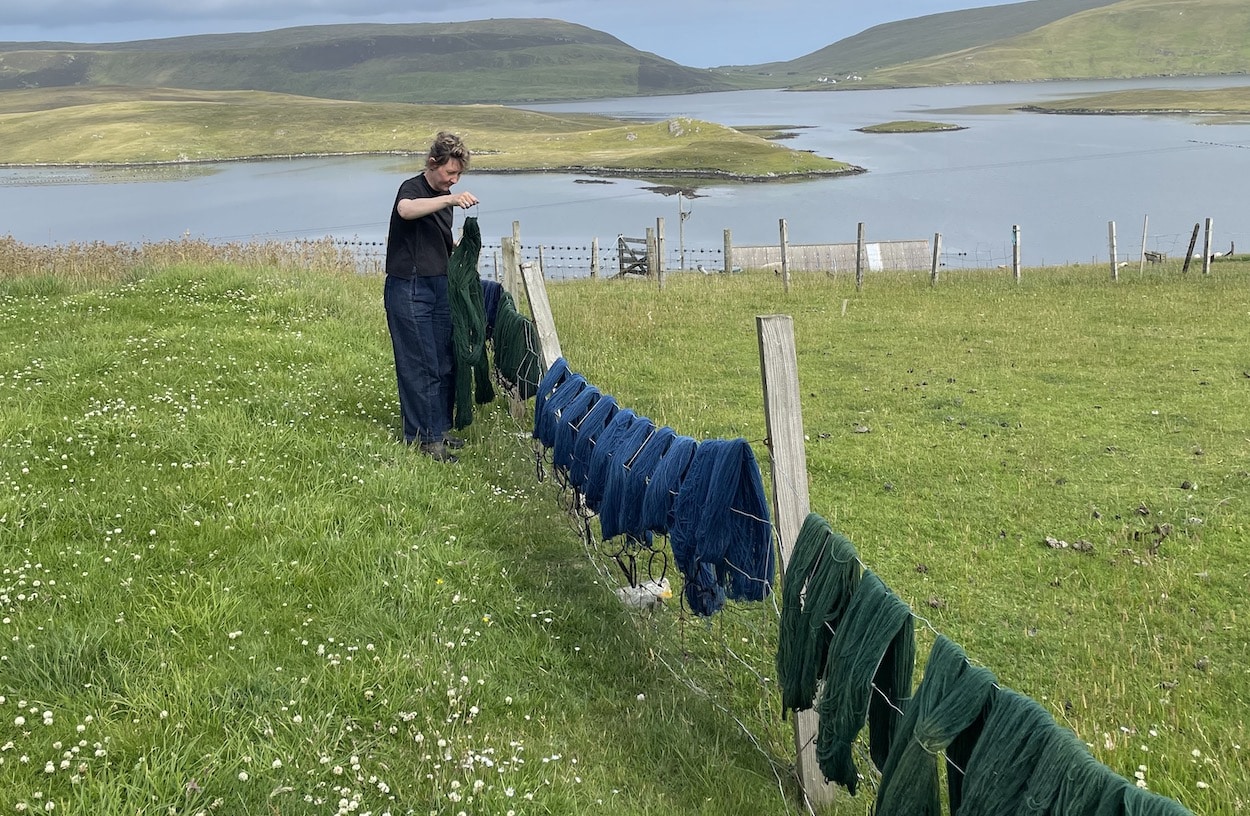
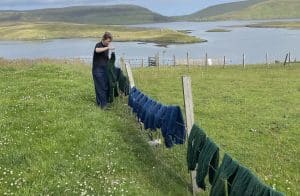
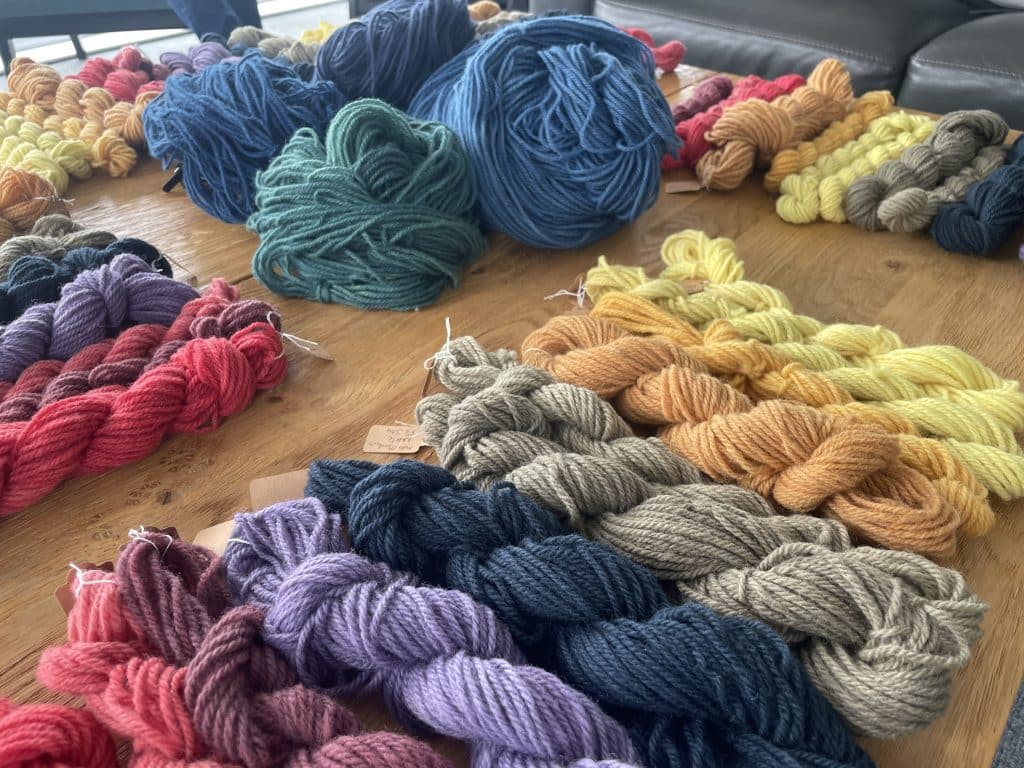
I have been also busy over the summer dyeing yarn, those months are the perfect time of year for dyeing; nettles, rhubarb leaves, ladies’ mantle and dock leaves all become a regular part of the dyeing schedule. As these plants tend to give a range of yellows and I often overdye them with indigo to give a range of greens and teals.
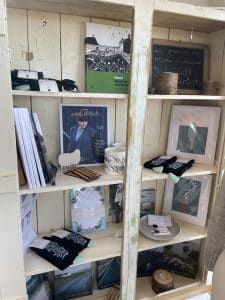
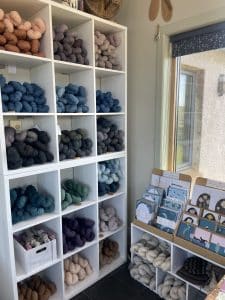
Most of this dyed yarn has been going straight into the shop which is located on the croft and is attached to the house. It has been lovely to see so many visitors to the shop from Shetland and from all over the world either as part of organised tours or as independent travellers – thank you if you have visited!
 .
.  .
.
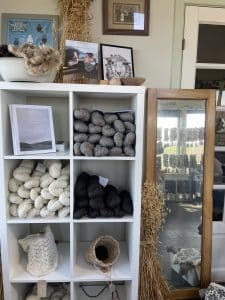
The down side of this is that I don’t get a chance to add any of the dyed yarn to the online shop while the shop is open during the spring and summer months. Natural dyeing is a slow process and I unfortunately I don’t have the space, time or resources to increase the amount I can dye at one time. After Shetland Wool Week the shop will be closed (although I can open by appointment) and I will then be able to stock up the online shop (once I have recovered from the busy season!).
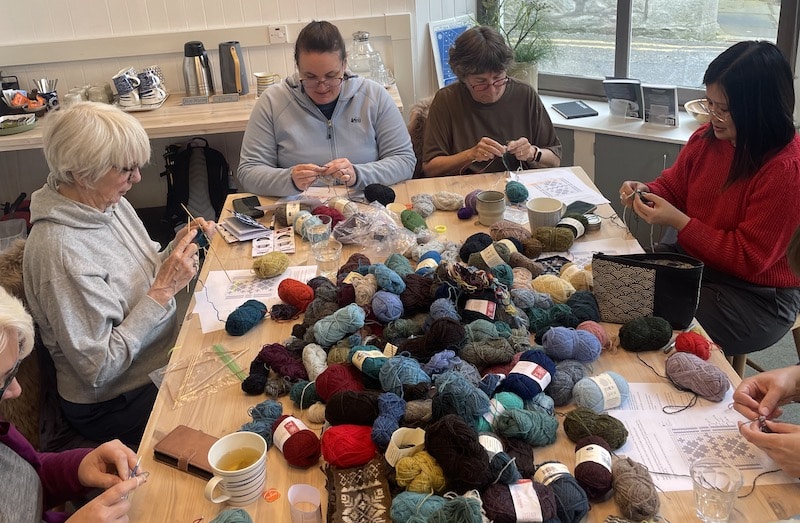
As well as welcoming tour groups to the shop I have also taught knitting and natural dyeing classes to several groups including those run by Misa Hay at Shetland Wool Adventures. It was a pleasure to spend time with each group and welcome them to the croft and speak to them about knitting techniques, the use of colour and dyeing techniques. It was lovely to meet so many people form all over the world!
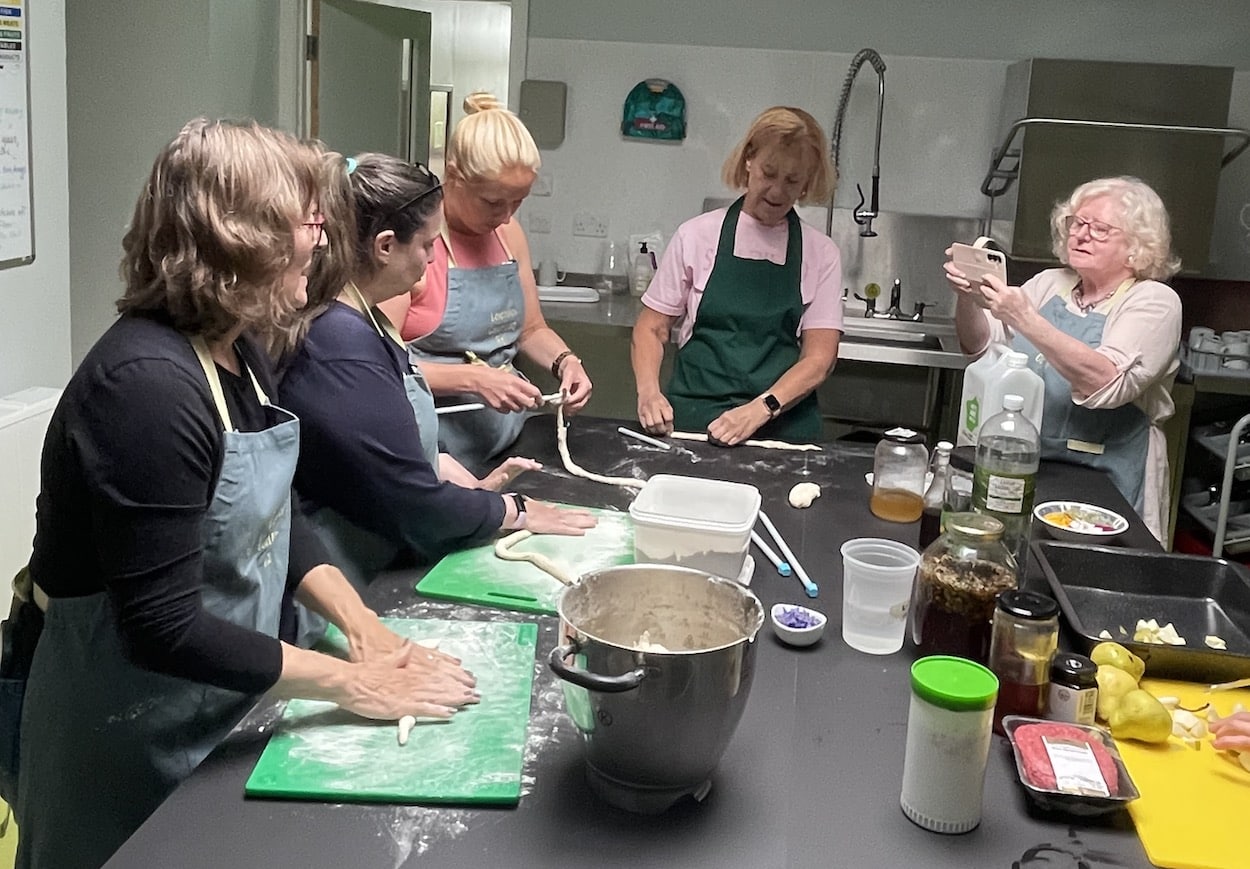
One of the highlights of the summer was when Misa invited me to join one of the groups in a cookery class by Jenny Watt (aka Food With Filska) who specialises in using foraged ingredients and local produce. You can find out more about her over on Instagram here. The group were involved in cooking the meal (which included knitted bread!) and we sat down to a delicious feast at the end of the session.
I haven’t had a summer holiday as such this year but I did spend two night on the island of Foula 20 miles west of the Shetland mainland. I can see the island from my house and I’m ashamed to say I have never been there before. I have been around it several times by boat back in my Marine Biology days. I knew from those trips that the scenery is stunning, although being a small island at 2.5 x 3.5 miles in size, Foula boasts the second highest sea cliff in the UK. My Great Granny was born in Foula in 1880 and so I can trace my family as being there for several generations. The family came out of the island an settled here in Burra where I live when she was 12 (in 1892). The first thing we did when we got there was to visit the family croft and house which is a ruin now. Our host, Kenny knew exactly where the site was and gave us a lift there. It was quite a moving experience standing where the family would have lived all those years ago and imagining them going about their daily lives.
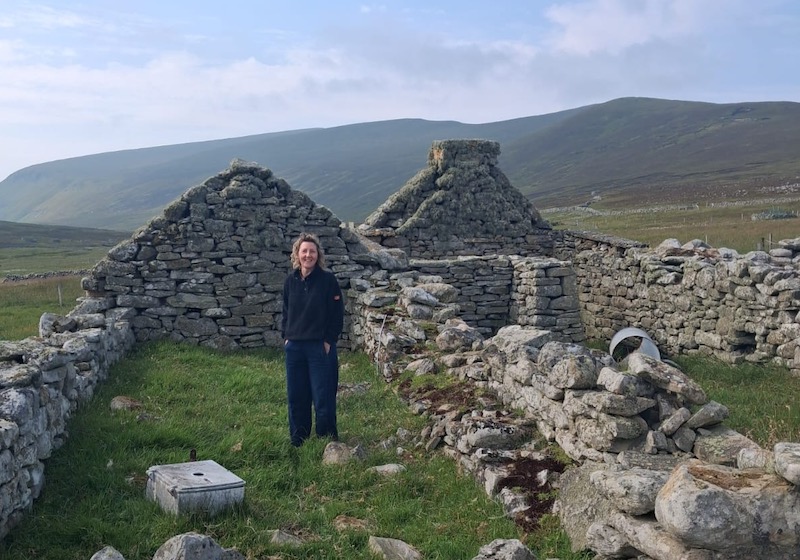
We went in by boat as the plane was cancelled due to mist and we came back by plane. We were really fortunate to have lovely weather while we were there and it was great to see the hills which I can see from my house from the island itself. For more information about Foula see https://www.foulaheritage.com/general.htm
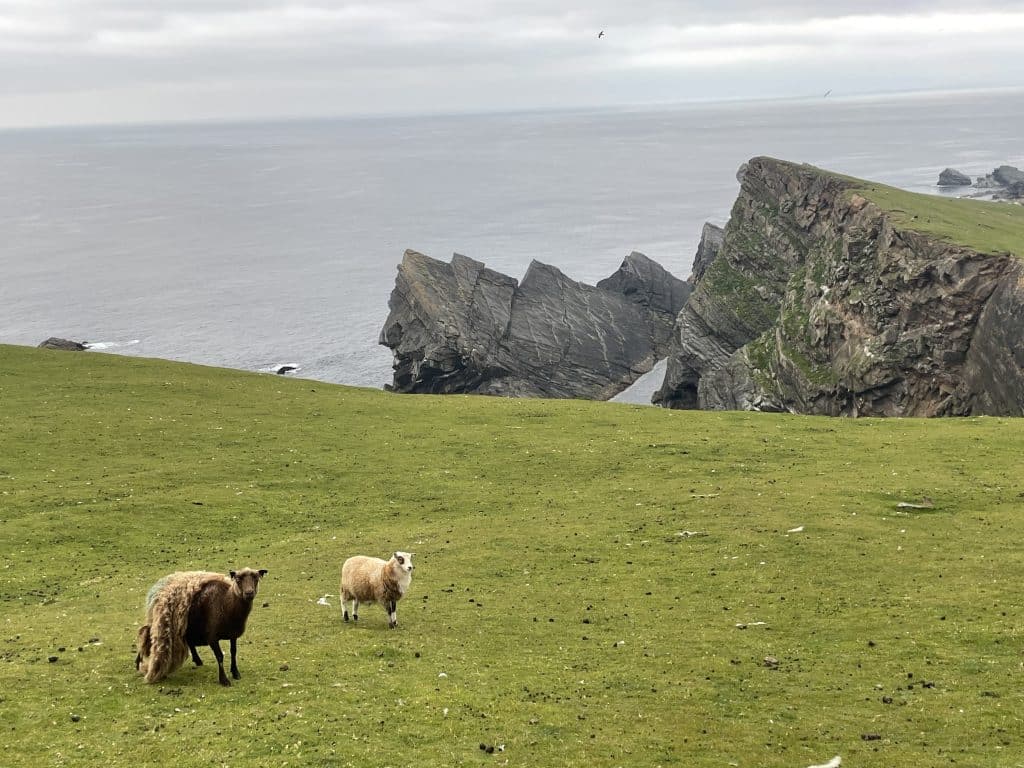
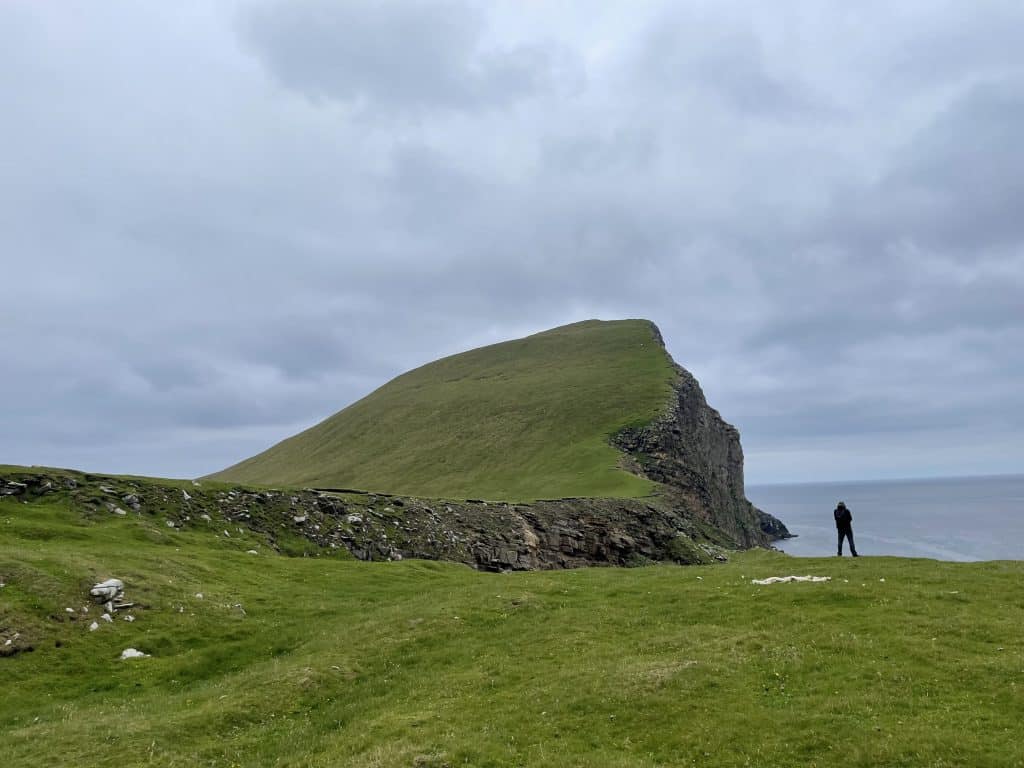
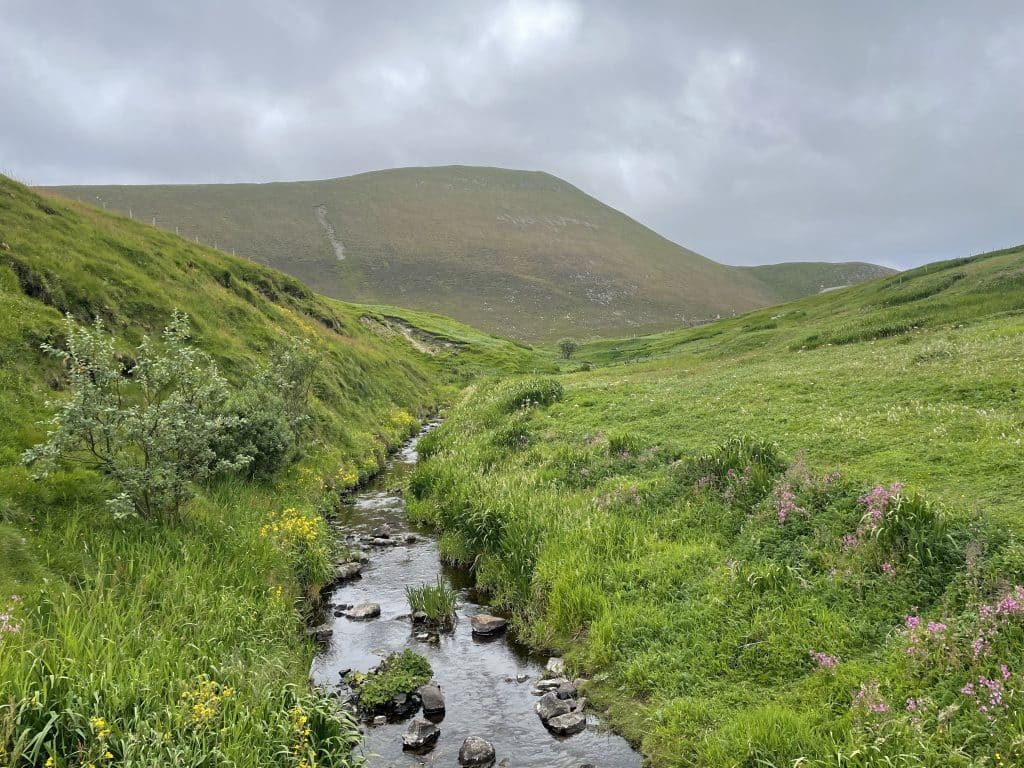
A highlight of my summer was the opportunity to spend a week in Fair Isle teaching on a knitting holiday organised and run by Marie of Fair Isle with Marie. The theme of the class was natural dyeing and Fair Isle knitting and Marie did a machine knitting session with the students and they all went away with a machine knit snood they had designed and knit themselves.
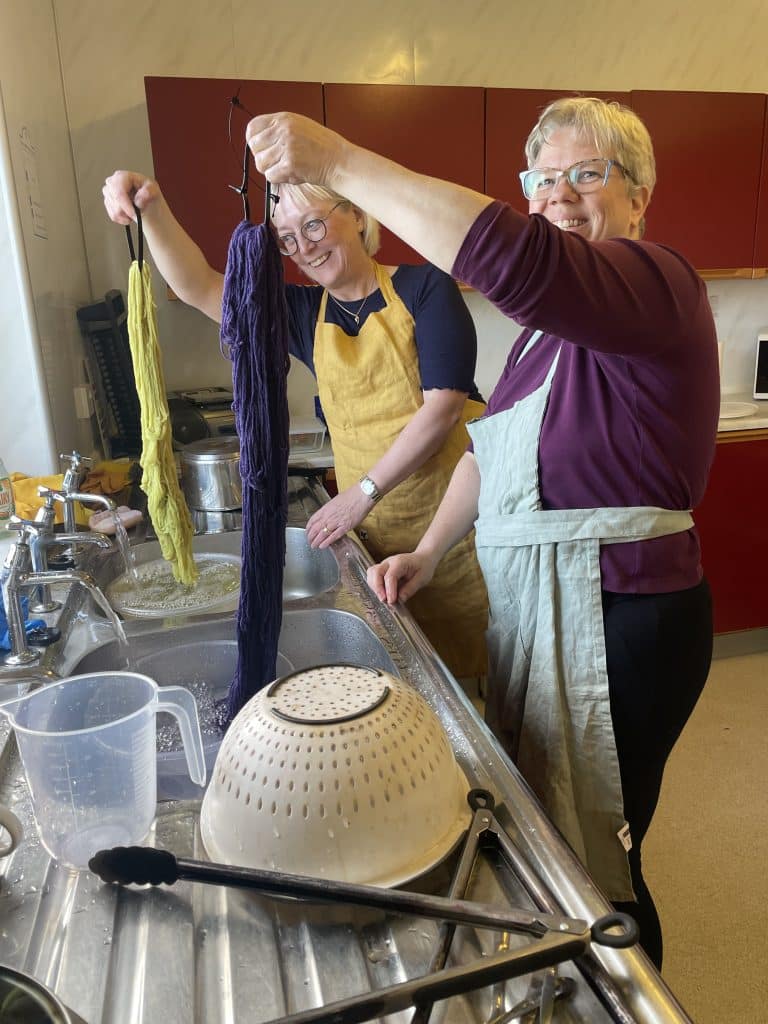
I spent two days teaching dyeing classes and the students got a range of eleven shades which they then used later in the week to knit a cowl using Fair Isle techniques.
The group of ten students stayed in the recently rebuilt Fair Isle Bird Observatory Fair lsle and we joined them for meals which were absolutely delicious and a highlight for me.
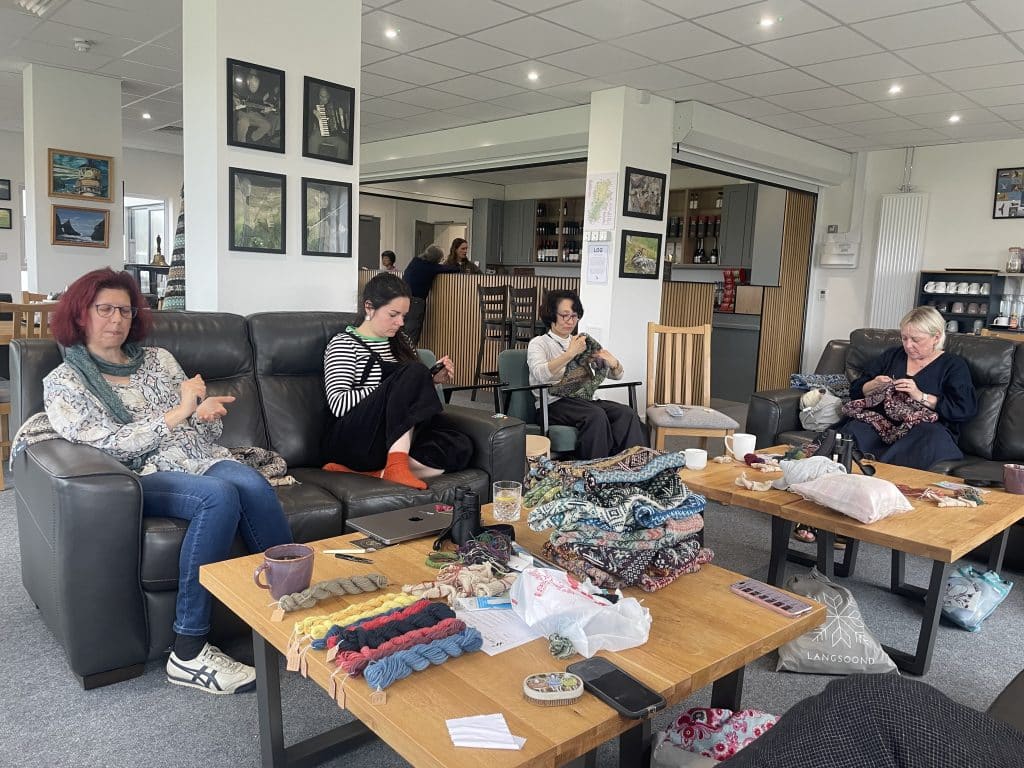
Fair Isle really is a really special place, I have visited several times before and each time I visit and although the week was busy I really felt it was a break away form the norm and I came home feeling inspired and full of new ideas. Of course it was lovely spend time with Marie who is a very inspiring person and with the group of ten ladies from all over the world. Marie and I will be running the same classes again next year, but it will be in October just after Shetland Wool Week. You can see details as well as for Marie’s other knititng holidays at Fair Isle With Marie.
As you might guess I haven’t spent a lot of time knitting but I have finished a few things including finish another Wearing Jumper (don’t ask me when I started it!). The knitting projects will be a blogpost for another time.
All the wool related people in Shetland are gearing up at the moment for Shetland Wool Week which starts in less than two weeks time. My time as curator came to an end after the 2025 event, it was a huge privilege to be involved and to work with so many people who are passionate about Shetland wool, knitting and the traditions that make our islands’ textile heritage so unique. I have just had a batch of DK yarn spun and I am waiting for it to come back from the mill, I won’t have much time to dye it before the event so I will have less in stock than previous years but I will do what I can when it arrives. My shop will be open extended hours during the week and I look forward to seeing everyone! For opening hours and directions see the visit page on my website Wool Week tends to mark the end of the season, it’s a great way to go out with a bang! I’m looking forward to be able to slow down a little bit and work a bit more on some new ideas and designs.